
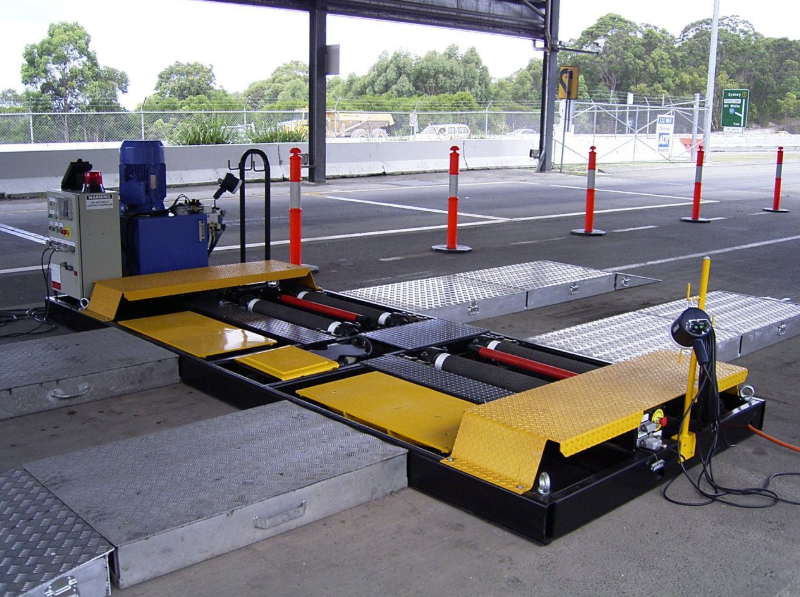
Ask a trucker about fear on the road. You won’t hear them mention flat tires first. Or even engine breakdowns. It’s brakes. Always brakes. A fully loaded truck doesn’t forgive hesitation when stopping. Regular inspections aren’t just formalities—they’re survival. That’s why the truck roller brake tester matters. It checks, under controlled strain, if the system can really stop. Not a guess. Not a feeling. A proof.
How Roller Brake Testing Really Works in Practice
People think testing brakes is simple. Step on the pedal—see if it works. But trucks don’t play by those rules. A roller brake tester spins the wheels with power. The truck thinks it’s moving, though it’s standing still. Then brakes are applied. Sensors read the force.
And that’s where the truth comes out. Which wheel drags. Which one bites too hard. Whether the left pulls stronger than the right. Small differences—drivers won’t always feel them. But on the highway? Or on a steep downhill? That imbalance can jerk forty tons of metal across lanes. Mechanics who stare at the numbers see it immediately. The danger before it becomes a crash.
Why Brakes Fail Without Warning
There’s a myth. Brakes only fail when pads grind down to steel. Not so. Failures creep in quietly. An air hose leaks. A piston sticks. Heat builds up from endless descents. None of this shows in a quick look.
Consider this. A truck carrying 30 tons might demand 40% more braking force than when it’s empty. If one axle slacks off, others overwork. Heat spreads uneven. Parts wear odd. Slowly, the system bends toward failure. And by the time the driver notices—too late. That’s why roller testing is less about checking boxes and more about catching what can’t be seen.
The Unspoken Advantages of Roller Brake Testing
Yes—accuracy, efficiency, consistency. Everyone says that. But there’s another side, rarely mentioned. Patterns.
A fleet manager tests the same trucks month after month. Data piles up. Suddenly it’s clear—one truck model keeps showing weaker rear brakes. Or one route always sends trucks back with overheated axles. This isn’t just about today’s test. It’s about predicting the next breakdown.
That’s where the hidden value lies. Roller brake testers don’t only reveal problems. They build a picture. A map of weaknesses. From that, managers adjust routes, maintenance cycles, even purchasing decisions. Accidents prevented not by chance, but by numbers.
And drivers? Confidence matters. Knowing your brakes aren’t “probably fine” but tested, measured, proven. That changes how a person drives across mountains at night. The truck roller brake tester gives that confidence. Quiet, but powerful.
Integration into Modern Maintenance: More Than a Checkbox
Regulations force annual checks. Everyone knows. But fleets that treat roller testing as nothing more than paperwork—they miss the point.
Imagine a digital tester storing results for each wheel, year after year. A pattern emerges. Certain axles degrade faster than others. Instead of waiting for them to snap in peak season, you swap them out early. Fewer emergencies. Predictable costs. Drivers less likely to call from the side of a pass at 2 a.m.
This is the difference between compliance and strategy. Testing as a law keeps you legal. Testing as a practice keeps you safe—and profitable. That’s what modern fleets are learning.
When Testing Gets Ignored
Not all companies bother. Some still rely on a mechanic’s ear. Or trust drivers to feel when brakes are “off.” Dangerous gamble. Trucks can appear fine. Until the first hard stop on wet asphalt. Or the first heavy descent with a full load.
Skipping roller testing saves minutes. But when failure comes, it costs far more. Cargo wrecked. Deadlines gone. Sometimes worse. And the worst part—it’s preventable.
Conclusion:
Brakes decide everything. Drivers live with that truth. Mechanics see it every day. Operators balance it against costs. Reliable testing isn’t a luxury; it’s survival dressed up as routine. The truck roller brake tester cuts through assumption. It delivers numbers, proof, warnings. It may not look dramatic, sitting in a workshop. But its results can mean the difference between a truck arriving safely—or never arriving at all.